
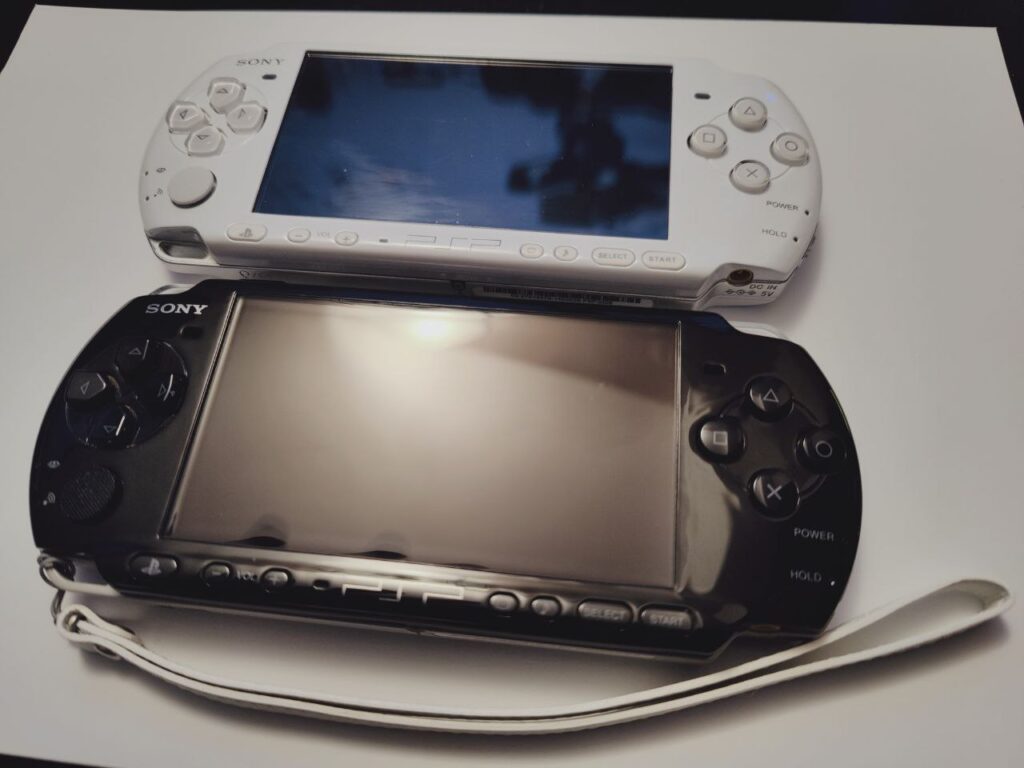
Short answer – no. But this topic is more complicated than just a short answer.
The reason is – hardware
PSP is of the last generation of the devices that are relatively easy to emulate. The reason is simplicity of its hardware.
GPU of PSP has a fixed function pipeline.
Easiest way to explain what it means – you can’t write programs that run on GPU. You can only use parameters that was implemented in the GPU by Sony. It heavily restricts the developers but also makes emulation much easier.
The home consoles era that use shaders (these small GPU programs) started only with PS3 and PS Vita. That’s why the emulation of PS3 is so much more complicated than the emulation of PS2 or PSP.
Since pipeline is fixed you can implement your own manipulations on top of it – you don’t need to execute everything precisely. This gives a field of visual improvements like the ones that were implemented for PS1 and PS2.
Precision of calculations
But what is even more important – GPU of PSP is not precise. And emulation fixes it very well.
I will cut off math and technical details in my explanation as much as possible.
Imagine 2 walls that are two separate objects in a game. They are the same but have different positions. Each polygon of the wall is calculated depending on this position. And for PSP it’s a problem cause it’s unable to calculate them precisely and it creates visual artifacts.
To remove these visual artifacts PSP’s GPU requires both walls to be inside one object so there will only one base position. Then imperfection of calculations will be shared with polygons of these walls.
On the other side when you have two walls inside one object – it’s heavier on memory cause memory needs to hold both walls inside it.
In our earlier example with two separate objects – these objects are basically clones and it reduces the memory consumption cause memory holds geometry of only one wall.
How these imperfections look? Black stripes between polygons (walls in our example). Or ability to see the rest of the level between them.
This is only one of the examples, there are even more of them being fixed by emulation.
Screen and analogue stick
PSP was marvelous for it’s time but the screen dated heavily in 2026. If you get PSP with original screen that would be the first hardware part to replace.
When I played some games on PSP with original screen and later on my Retroid 3 – screen difference with modern IPS is massive.
Second problem is stick drift. It is a huge problem. All PSPs I’ve bought had broken sticks and needed repairs. New analogue stick is an easy fix but you will need to do it from time to time since the modern replacements are not of the best quality. Stick is unreliable and it makes PSP a less reliable portable console choice overall.
Why I’m still using PSP?
Need for repairs may sound unpleasant but on the other side PSP provides you a lot of options for personalization. It’s common to replace shells for example and there are variety of options you can get. It gives even more character to your device.
PSP is one of the most portable consoles of all times. No modern “shovels” can compete with it.
PSP is made as a top device by a big team inside a huge corporation. You can’t take it from it. It’s nice and comfortable to use.
PSP is easy to fix. Unlike modern devices PSP is from the era when companies didn’t declare war against user repairs.
And the list of reasons still goes on. Let’s admit – PSP has its unique charm that emulation will never provide.
We have an article about should YOU get PSP. Short answer is – yes.
2 thoughts on “Is real PSP better than emulation?”